

If you own a generous block in Brighton or anywhere across Melbourne’s Bayside, you have likely considered the possibilities. A dual occupancy home can unlock a second income stream, house extended family under one roof, or simply make the most of land that a single dwelling barely uses. For homeowners who value quality and design, the question is not whether to explore dual occupancy. It is how to get the layout, privacy and parking right from day one.
Working with experienced dual occupancy builders is the difference between a project that flows smoothly through council and one that stalls for months. Brighton sits within the Bayside City Council area, where heritage overlays, neighbourhood character expectations and site coverage limits all shape what you can achieve. The good news? Recent planning changes at the state level have made the approval pathway faster and more predictable than ever.
This guide walks you through the design configurations available for dual occupancy homes in Brighton, the privacy and parking decisions you will need to make early, and how a collaborative building process keeps the whole experience stress-free.
Why Dual Occupancy Matters for Your Brighton Home
A dual occupancy is not just a second building on your block. It is a lifestyle decision that affects how your family lives, how your property earns, and how your investment grows over time.
Brighton homeowners who get this right often describe the outcome as transformative. Parents who once worried about downsizing now live in a beautifully designed home while their adult children settle in next door. Others rent one dwelling and watch the rental income cover a significant portion of their mortgage. Some plan ahead, knowing that two separate titles could mean two separate sales down the track, each commanding a strong Bayside price.
The flip side is that poorly planned dual occupancy projects create headaches. Overlooking a neighbour’s living area, squeezing two driveways into a narrow frontage, or underestimating council setback requirements are common regrets. These are preventable with the right design and planning advice upfront.
Melbourne’s demand for medium-density housing continues to grow. The Victorian Government’s Amendment VC267 and the Townhouse and Low-Rise Code, introduced in March 2025, have streamlined the approval process across the state. For Bayside properties assessed under Clause 55, projects that meet all applicable standards now follow a deemed-to-comply pathway, which means faster decisions and fewer objection risks. This shift makes dual living more accessible for everyday homeowners, not just large developers.
The current Melbourne trend favours thoughtful, architect-quality dual occupancy homes over generic townhouse builds. Brighton buyers and tenants expect a level of finish and character that sits well above the suburban average. Getting the design right is not optional here. It is essential.
Layout Options for Dual Occupancy Homes in Brighton
Your block’s shape, width and orientation will largely determine which dual occupancy layout works best. Each configuration brings different advantages for privacy, natural light and street presence.
Side-by-Side (Attached or Detached)
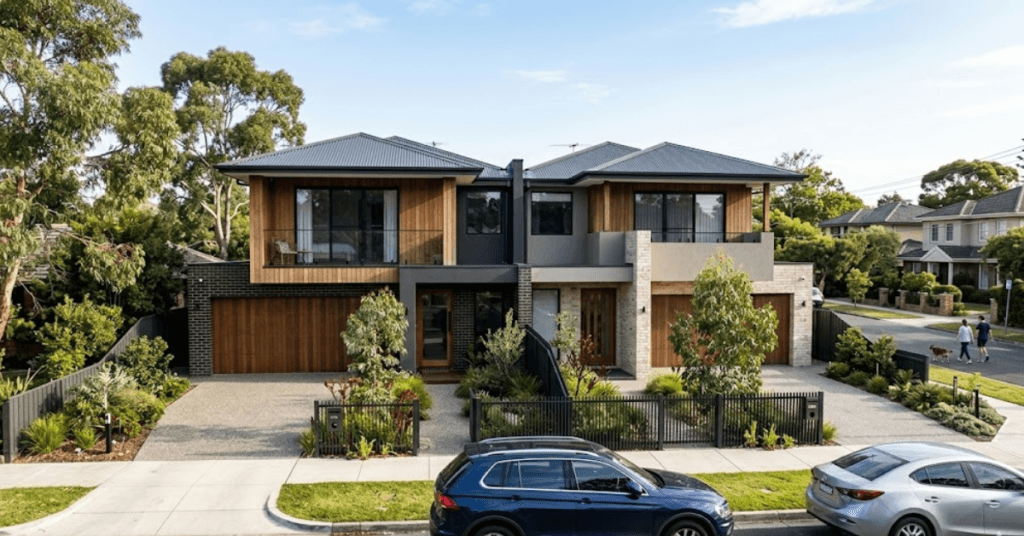
This layout places two dwellings next to each other, sharing or separated by a central boundary. It works well on wider blocks, typically those with a frontage of 15 metres or more. Both homes face the street, which gives each dwelling its own sense of address and curb appeal. Side-by-side builds suit Brighton’s leafy streetscapes because both homes can be designed to complement the established neighbourhood character.
Front and Rear
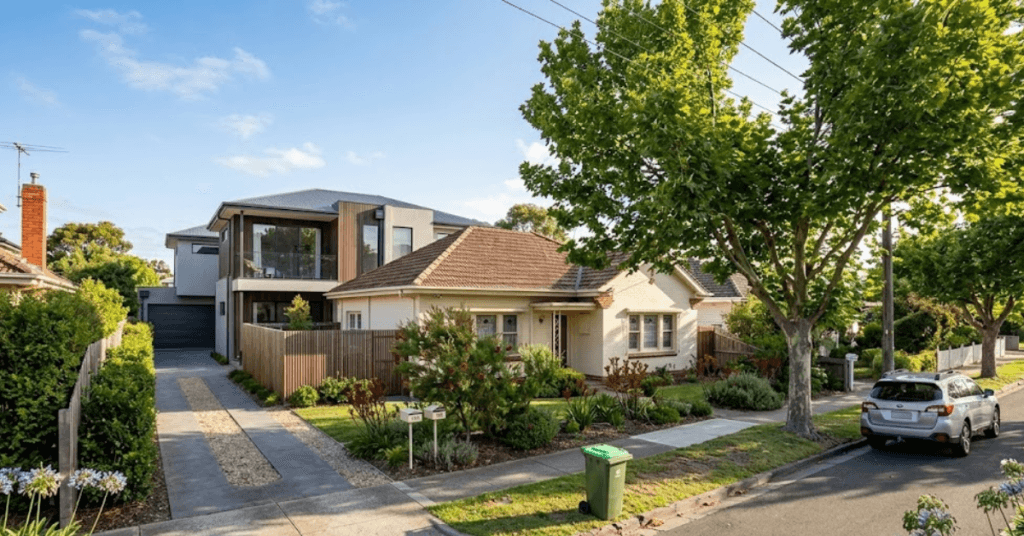
The most common configuration for narrower blocks, this places one home at the front of the site and the second towards the rear. The rear dwelling is accessed via a shared driveway along one side of the property. This layout works particularly well when the existing front home is worth retaining and a new build can sit behind it, making the most of the backyard space.
Single Building, Dual Living
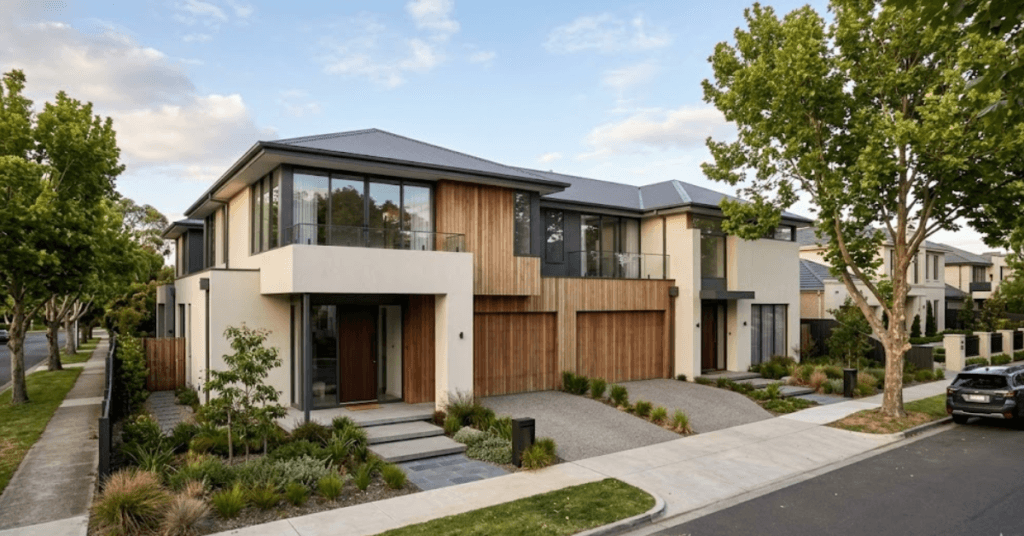
Sometimes the smartest dual occupancy does not look like two separate homes at all. A single building designed with two self-contained residences, each with its own entrance, kitchen and living spaces, can satisfy council requirements while presenting a cohesive facade. This approach is ideal when heritage overlays or neighbourhood character controls limit the visual impact of new development.
Whichever layout you choose, orientation matters enormously in Melbourne. North-facing living areas and private open space capture winter sun and stay comfortable year-round. A good building designer will map sun paths across your block before locking in the floor plan. For more guidance on working with natural light in a custom home design, see Casabella’s tips on maximising natural light in your home.
Privacy Design: Keeping Two Homes Feeling Like Two Homes
Privacy is consistently the number one concern homeowners raise when considering a dual occupancy. Nobody wants to feel like they are living on top of their neighbours, especially when that neighbour could be family.
Window placement and screening are your first line of defence. Offset windows between the two dwellings so that living areas do not directly face each other. Where windows must align, obscured glazing, external louvres or vertical garden screens maintain views to the sky and garden without sacrificing seclusion. Bayside Council assesses overlooking as part of the planning permit process, so addressing this at the design stage avoids costly revisions later.
Acoustic separation is equally important, particularly in attached configurations. Insulated party walls, staggered stud framing and resilient mounting systems for plasterboard dramatically reduce sound transfer between dwellings. In a high-quality build, you should not hear your neighbour’s television or morning alarm.
Outdoor privacy comes down to thoughtful landscaping and boundary treatment. Mature hedging, raised planter walls and strategically placed pergolas create distinct outdoor rooms for each dwelling. The goal is for each home to feel like a standalone property, even though they share the same block.
If you are planning a renovation that includes a dual occupancy component, understanding the broader factors at play will help you make smarter decisions. Casabella’s guide on factors to consider before renovating is a useful starting point.
Parking and Access: Getting It Right from the Start
Parking is one of the most practical (and often overlooked) aspects of a dual occupancy project. Council requires a minimum number of car spaces per dwelling, and the driveway access arrangement can shape the entire site layout.
In the Bayside municipality, you will generally need at least one dedicated car space per dwelling, with two spaces preferred for larger homes. Tandem parking (one car behind another) is sometimes accepted, but side-by-side arrangements offer more flexibility and are often easier to use day-to-day.
Crossover width and location are controlled by council. Brighton streets with established canopy trees or bluestone kerbing may limit where a new crossover can go. Your designer needs to factor this in early, because a driveway that does not meet council standards can hold up your entire permit application.
For front-and-rear configurations, the driveway to the rear dwelling typically runs along one side of the property. This accessway needs to be at least three metres wide to comply with safety standards, and it must allow for safe reversing or turning so vehicles are not forced to reverse onto the street. Some homeowners choose to integrate the driveway with landscaping and permeable paving to soften its visual impact and manage stormwater at the same time.
Electric vehicle charging is also worth planning for now, even if you do not drive an EV today. Running conduit and a dedicated circuit during construction costs a fraction of retrofitting later.
Navigating Bayside Council Requirements
Brighton falls under Bayside City Council, and the planning controls here reflect the area’s established character. Most residential land in Bayside sits within the Neighbourhood Residential Zone, which means stricter oversight on height, site coverage and neighbourhood character than you would find in a General Residential Zone.
A planning permit is required for any dual occupancy development. Your application will need to include detailed architectural plans, shadow diagrams, a landscape plan and a planning report that demonstrates compliance with Clause 55 (ResCode) standards.
The introduction of Amendment VC267 in March 2025 brought a consistent set of planning rules across all Victorian councils. For dual occupancy projects up to three storeys that meet every applicable Clause 55 standard, the deemed-to-comply pathway means the council cannot refuse on those grounds and third-party objection rights are limited. This is a significant shift for Brighton, where heritage and character overlays have historically lengthened the approval timeline.
That said, overlays still matter. Heritage overlays, vegetation protection overlays and design and development overlays can all add requirements to your project. Engaging a town planner who understands Bayside’s specific planning culture is one of the smartest investments you can make before lodging an application.
Key Design Decisions to Make Early
Not every decision needs to be locked in on day one, but some choices shape everything that follows. Getting these right early saves time, money and stress.
- Will you live in one dwelling or rent both? This affects the level of finish, the floor plan priorities and how you approach the build timeline.
- Attached or detached? Attached builds share a wall and reduce construction costs, but detached configurations offer better acoustic privacy and may hold stronger resale value.
- Retain or demolish the existing home? If your current Brighton home has character and solid bones, designing around it can save on demolition costs and speed up council approval.
- Subdivide now or later? Not every dual occupancy can be subdivided into two separate titles. Check minimum lot sizes with Bayside Council before assuming you can sell each dwelling independently.
- Where does the driveway go? This decision locks in the footprint of both dwellings, so resolve it before detailed design begins.
When budget constraints force trade-offs, prioritise the elements that are hardest to change later: structural layout, orientation, and services connections. Finishes, landscaping and interior styling can always be upgraded down the track.
The Casabella Approach to Dual Occupancy
At Casabella Built, dual occupancy projects go through the same rigorous process as every custom home we build. It starts with the Round Table process, where you sit down with our in-house building designer, project manager and registered builder to map out your vision, your budget and your priorities before a single line is drawn.
This collaborative approach prevents the miscommunication that derails so many building projects. Your designer and builder are in the same room from day one, which means the plans that go to council are buildable, on budget and true to your brief.
“A dual occupancy should feel like two beautifully crafted homes, not a compromise squeezed onto one block. When we sit down with a homeowner at the Round Table, the conversation is always about lifestyle first. How do you want to live? What does privacy look like for your family? Once we understand that, the design follows naturally.” — Adrian Giardina, Managing Director, Casabella Built
We provide free rendered images so you can visualise your dual occupancy before committing to construction. Seeing your two homes on screen, in context with your streetscape and landscaping, removes a huge layer of uncertainty.
Casabella limits the number of projects we take on at any time. This is deliberate. Quality over quantity means your project receives the personalised attention it deserves, backed by a six-year warranty on workmanship and the accountability of dealing directly with a registered builder. No middlemen, no subcontracted project managers, and no surprises.
Design Tips for a Standout Dual Occupancy
- Use material palettes that complement each other without being identical. Slight variation between the two dwellings adds visual interest and individual character.
- Invest in quality front fencing and entry landscaping. First impressions set the tone for the entire property and signal the calibre of the build.
- Consider shared infrastructure like a single rainwater tank serving both dwellings. It reduces costs and simplifies maintenance.
- Specify generous ceiling heights (2.7 m minimum) in living areas to create a sense of space, even in compact floor plans.
- Do not underestimate storage. Built-in robes, linen cupboards and concealed laundry areas keep both homes feeling uncluttered and liveable.
- Plan outdoor entertaining spaces that feel private to each dwelling. Even a small courtyard with the right screening and planting can feel like a retreat.
Your Next Step
A well-designed dual occupancy home in Brighton is one of the smartest moves you can make with a Bayside property. Whether you are building for family, for investment, or a combination of both, the design decisions you make now will shape how the property performs for decades.
Great design does not have to mean stress or budget blowouts. With the right dual occupancy builders guiding the process, your project can move from vision to keys with clarity and confidence at every stage.
Ready to explore what is possible on your block? Book a free 30-minute Home Planning Consultation with the Casabella Built team. Call us on 03 9052 4430 or visit casabellabuilt.com.au to get started.